

The Los Angeles Lakers have completed a massive roster overhaul by drafting Cameron Carr and making sweeping changes through free agency. They signed Quentin Grimes, Walker Kessler, and Sandro Mamukelashvili to four-year deals, brought Collin Sexton in on a two-year contract, and handed out a number of one-year prove-it deals to intriguing supporting players.
For as exciting as that may be, the Lakers have relied on four-year contracts and player options in a way that suggests they're not as appealing to free agents as they need to be.
Player options are essential parts of contracts in the modern era, as the empowerment of the athlete has created the opportunity to control their future. There are times when such an inclusion is ill-advised, however, and Los Angeles has been as guilty as any organization of overlooking that fact.
Yossi Gozlan and Sam Quinn recently discussed the Lakers on The Third Apron Podcast and called them out for how disproportionately they've relied on long-term contracts and player options.
For those who can't access the video, Yossi Gozlan asked:
"What are the comparative deals? What other role players like them got deals this big and long?"
Quinn responded with the following:
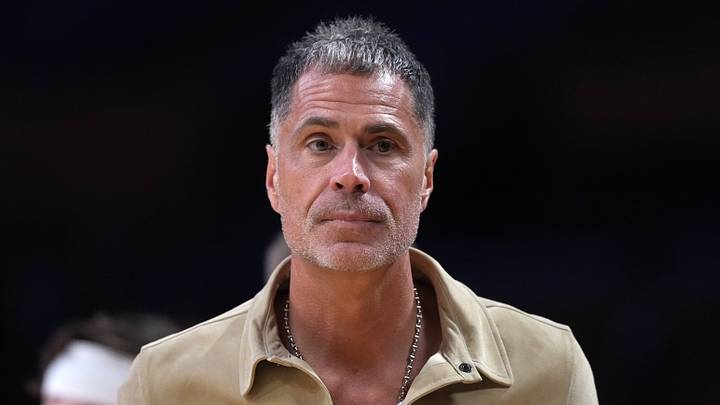
"They also got player options, which is the Pelinka special. I did a bit of research. I think it was 16 of their last 23 contracts included a player option in the last year. The Lakers hand out player options like candy."
Los Angeles still managed to sign quality players who should help Luka Doncic and Austin Reaves, but the points raised by Gozlan and Quinn are difficult to dispute.
Lakers steadily rely on player options, multi-year deals for role players
To answer Gozlan's initial question: 15 players have signed four-year contracts this summer. Five of those 15 deals were worth less than $6 million per season. Of the remaining 10, eight carried an annual salary of at least $13 million per season.
Of those eight, four were handed out by the Lakers. One of the others was the heavily-scrutinized Gary Trent Jr. deal that the NBA is investigating as a potential circumvention case.
The other three went to Ayo Dosunmu, Tari Eason, and Trae Young. Minnesota re-signed Dosunmu after he showed out during the 2026 NBA Playoffs—and also after starting guard Donte DiVincenzo suffered an injury that could cost him the 2026-27 season.
Eason, meanwhile, has spent his entire four-year career with the Rockets, while Young is viewed by the Wizards as a potential franchise cornerstone.
That leaves the final four players: Grimes, Kessler, Mamukelashvili, and Reaves. Reaves is a homegrown talent, which gives Los Angeles a justification for the long-term nature of his contract. Grimes, Kessler, and Mamukelashvili, however, have never played a game for the Lakers.
In fact, of the 11 players who signed four-year deals worth at least $10 million, the trio of Grimes, Kessler, and Mamukelashvili are the only players who have yet to play for the team they signed with.
Lakers gave four-year deals to players who have never played for them
To make matters worse, Quinn's point is corroborated by the fact that all three of Grimes, Kessler, and Mamukelashvili have player options for the fourth season of their respective deals. In other words: Even if they struggle, they control their own destinies from a salary cap perspective.
Considering the Lakers are shelling out an average of more than $60 million per season to three players who have yet to prove whether or not they fit with Doncic and Reaves, let alone head coach JJ Redick, that's a haunting possibility.
It's an unfortunately consistent trend. A year ago, for instance, Los Angeles signed Deandre Ayton and Marcus Smart coming off of down years to contracts that included player options for 2026-27. They also included a player option in Jarred Vanderbilt's four-year contract—which they're actively attempting and struggling to offload.
That ultimately causes one to question if the Lakers are truly a draw in free agency if they have to rely on long-term deals and player options in ways others simply don't seem to be depending on.
 Add us as a preferred source on Google