

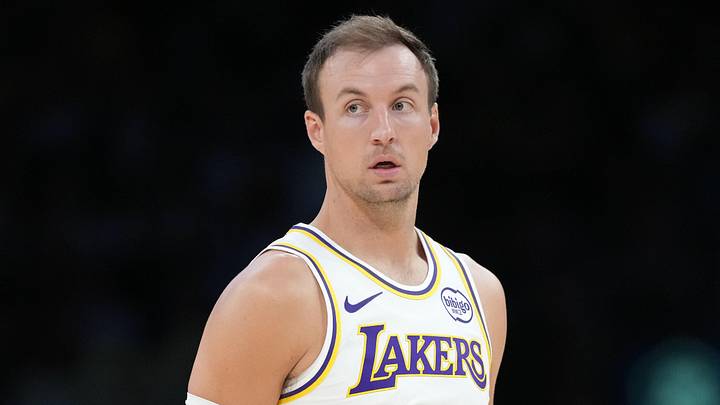
The Los Angeles Lakers would not have enjoyed the type of success they did in 2025-26 without Luke Kennard. There is simply no way around that. This offseason, they will need to figure out whether that has more to do with the individual or what he represents.
Rob Pelinka bought low on Kennard by managing to secure his services for the afterthought of giving up Gabe Vincent and a second-round pick. The new Lakers sniper immediately made the acquisition worth the franchise's time.
Kennard gave Los Angeles the type of shooting threat that opened up the floor immensely. When injuries called for it, the veteran sharpshooter was even capable of stepping into a larger role in the Lakers offense, helping mask the pain of missing Luka Doncic and Austin Reaves.
It was not all as perfect as it sounds, though. Kennard had some lows, and is now heading for free agency upon the expiration of his one-year, $11 million deal. In an offseason where spending is expected, the Lakers must decide what price would make them comfortable with bringing him back.
Luke Kennard's price should dictate a Lakers return
The Lakers went 22-10 with Kennard in the lineup after his acquisition. For his part, the numbers backed up him being impactful.
Kennard averaged 9.0 points, 2.6 rebounds, and 2.4 assists, shooting 52.7 percent from the field and 44.8 from beyond the arc. His marksmanship opening up the floor allowed the Lakers to be one of the five most efficient shooting teams from deep after the All-Star break. LA connected on 37.8 percent of their attempts.
That last part may be a touch overstated, though, as Los Angeles was still being selective with the shots they took from distance. The Lakers only put up 31.9 attempts from triple post-All-Star break. That ranked in the bottom five. 62.0 percent of their overall shots were coming from inside the arc.
All that considered, it was hard to ignore Kennard's strong fit overall. The Lakers scorer even helped steal Games 1 and 2 of the Houston Rockets series with 27 and 23 points a piece in those wins.
However, what immediately followed was a painful reminder of why there is a discussion around Kennard at all. Over the next five playoff games, the percentages dipped mightily. Kennard only shot 26.5 percent from the field and 18.8 percent from deep.
One shooting slump in the postseason should not bury a player's chances to return, but they do point to a bigger question. How much does Kennard help when his shot is not dropping?
Defense is not his strong suit by any means, limiting his impact to one side of the court. The silver lining to any poor shooting on offense will always be that defenses will still mark him as a threat regardless, allowing Kennard to create opportunities with his playmaking.
Even so, there are clear limitations that come with his game. Those should keep the Lakers from truly breaking open any piggy bank on a considerable multi-year deal for the 29-year-old.
Kennard should have reminded Los Angeles just how much they should be focusing on adding shooting help. Ideal for them, given they are building around the deficiencies of Doncic and Reaves, is having those shooters be capable defenders too.
The door should not be closed on Kennard returning, but it has to be a game of the price being right for the Lakers. Otherwise, even if some of the other players on the market do not have his upside as a shooter, there can be a safer and more reliable floor found in the two-way impact to make up for it.
 Add us as a preferred source on Google