

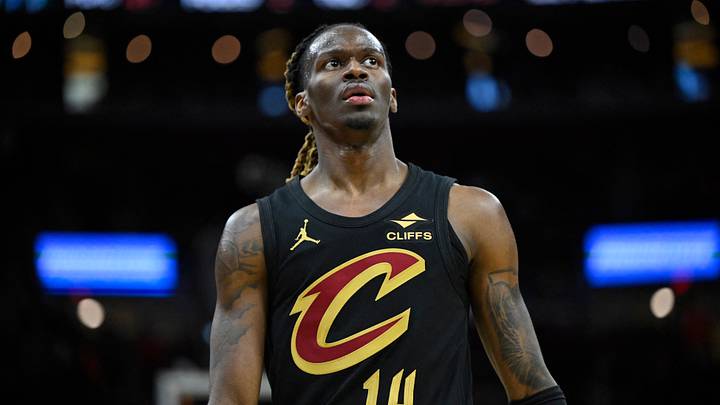
Former Los Angeles Lakers trade target Keon Ellis has removed himself from the free agency market just as quickly as the offseason began. Ellis has signed a two-year contract with the Brooklyn Nets that will pay him $9 million per season.
In the process, Ellis has provided an important reminder to the Lakers that there's a cost to not developing players internally: Having to compete with others for even fringe rotation talent.
Ellis, 26, turned in an eye-opening 2024-25 season and appeared to be on the road to notoriety as a premier 3-and-D player. He struggled to a degree in 2025-26, however, and thus hit the open market with less fanfare than previously anticipated.
That didn't stop the Nets from signing Ellis to a two-year, $18 million contract that should position him to play meaningful minutes in 2025-26.
Free agent sharpshooter Luke Kennard has agreed to a two-year, $13 million deal with the Phoenix Suns, with a player option for the second season, sources tell ESPN. pic.twitter.com/rXhDalEdhF
— Shams Charania (@ShamsCharania) July 1, 2026
Though the Lakers don't necessarily need Ellis in specific, there's a lesson to be learned about how expensive it is to disregard the NBA Draft and the cost-efficient talent it can produce.
Former Lakers trade target Keon Ellis signs with Nets
The last player to play even a single game for the Lakers beyond a four-year rookie-scale contract was Andrew Bynum in 2009-10. It's a harrowing fact that speaks to Los Angeles' blatant disregard of how beneficial drafted talent can be.
Even if one were to overlook the manner in which stars are often developed within their initial organization, there's a free agency factor to consider, as well, for role players.
Rather than competing against the market for restricted free agents and banking on players like Ellis being undervalued, teams that draft well develop their own perfect fits. They can mold players like clay into individuals who who can contribute in a manner that specifically suits the system in place.
When free agency ultimately comes, said players will be restricted free agents and the incumbent teams will have the leverage of being able to match any offer sheets they receive.
The Lakers, meanwhile, are hoping to outbid teams for restricted free agents and scour the admittedly thin market for unrestricted free agents. They're doing so in a state of desperation, as they have a painfully short list of internally developing players to rely on for even end-of-the-rotation minutes in 2026-27.
With Ellis signing a two-year deal at $18 million, the Lakers have been taught once again how expensive it can be to compete for even the polarizing players in free agency.
 Add us as a preferred source on Google