

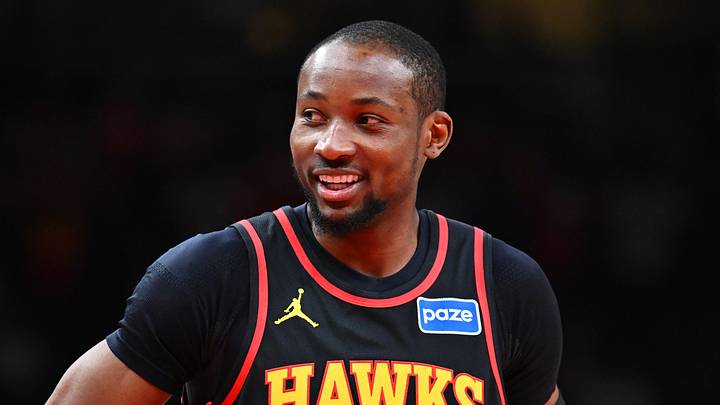
The Los Angeles Lakers and Cleveland Cavaliers have been known suitors for free agent forward Jonathan Kuminga throughout the 2026 period of free agency. The problem for both teams has been that they lack the financial flexibility to sign him outright to the type of deal he'd seemingly be willing to consider.
The Cavaliers appeared to fire the opening salvo in this arms race when they traded Dennis Schröder to create tax relief. The Lakers can't let that scare them into an overpay.
Cleveland has been in hot pursuit of two of the biggest names left in free agency: Kuminga and Peyton Watson. Speculation exists that the Cavaliers are prioritizing Watson, but it's currently unclear how they intend to proceed on either front.
What became abundantly clear on Friday, Aug. 14, however, is that the Cavaliers are going to be aggressive in creating financial flexibility. They did so by offloading Schröder.
Just in: The Cleveland Cavaliers are trading Dennis Schroder and cash to the Charlotte Hornets for Tre Mann, sources tell ESPN. pic.twitter.com/MNhjejPxJQ
— Shams Charania (@ShamsCharania) August 14, 2026
Cleveland saved at least $6.8 million in the swap of a proven veteran for an up-and-commer who averaged 12.6 minutes per game in 2025-26. It would certainly seem that something bigger is in the works.
Lakers can't let Cavs' financially-motivated trade force an overpay
There's no way around the fact that Los Angeles has a void at the starting forward spot. Luka Doncic and Austin Reaves are locked in at guard, and Walker Kessler will be the starting center. It's conceivable that either Quentin Grimes or Sandro Mamukelashvili will start next to them after they signed four-year deals with eight-figure annual salaries.
According to Jake Fischer of The Stein Line, the Lakers would start Kuminga at forward if they successfully sign him—thus revealing how highly they think of him and how significant the void is.
That makes the prospect of losing Kuminga rather terrifying, as there simply aren't many alternatives left in free agency. Of the players on the current roster who have the size to potentially step in as a modern 4, there are unavoidable question marks, including the fact that Cameron Carr is a rookie, Adou Thiero has a faulty jumper, and Jake LaRavia had a poor postseason.
For as polarizing as it would thus be to enter the 2026-27 season with the team in place, that's a risk the Lakers are going to have to take if the alternative is overpaying for Kuminga.
Signing Kuminga isn't as simple as taking a chance on his talent. Under the NBA's CBA, a sign-and-trade must produce a minimum of a three-year contract. Only the first season needs to be guaranteed, but Los Angeles isn't the only party involved in deciding the terms of a deal.
If Kuminga is unwilling to accept a contract with non or partial guarantees, or even player or team options, then the Lakers will be locked in for three years with a player whose reputation is built more on what he could be than what he presently is.
Lakers have more on the line than a need for talent
Kuminga is a talented scorer, but he's also an erratic shooter at 33.2 percent from beyond the arc and is an inconsistent off-ball defender. Furthermore, the Lakers have already given out four four-year contracts this summer and Jarred Vanderbilt has a $13,285,714 player option for the 2027-28 season.
Compounded by the fact that Grimes, Kessler, and Mamukelashvili have yet to play a game in the purple and gold, there are far too many question marks already to simply outbid the Cavaliers out of fear.
Los Angeles isn't just trying to build a championship-caliber roster. It's attempting to convince Luka Doncic to re-sign once he becomes a free agent just two years from now. If their 2026 signings fail to live up to expectations, convincing him to do so will mean asking him to remain patient until 2029, when their salaries are expiring and they can realistically be moved.
Adding Kuminga at an overpriced annual salary would only complicate that matter further. As such, the Lakers can't let the Cavaliers' pressure back them into a corner and a potential overpay.
 Add us as a preferred source on Google